
Sewing Pattern Pricing: Are Patterns Really More Expensive Today?
What sewists are really paying for—and why today’s prices make more sense than you think

The new owners of Simplicity.com have raised pattern prices. Let the outrage begin.
If you spend any time in online sewing spaces, you’ve seen the question come up again and again:
“Does anyone actually pay $25 for a sewing pattern?”
“If patterns are always on sale, why don’t companies just lower the price?”
Pattern pricing is one of the most persistent—and emotionally charged—topics among sewists. The frustration is understandable. But it’s also rooted in incomplete information and a distorted sense of historical pricing.
Let’s take a clear, grounded look at what sewing patterns really cost, what you’re paying for, and whether today’s prices really are “too high.”
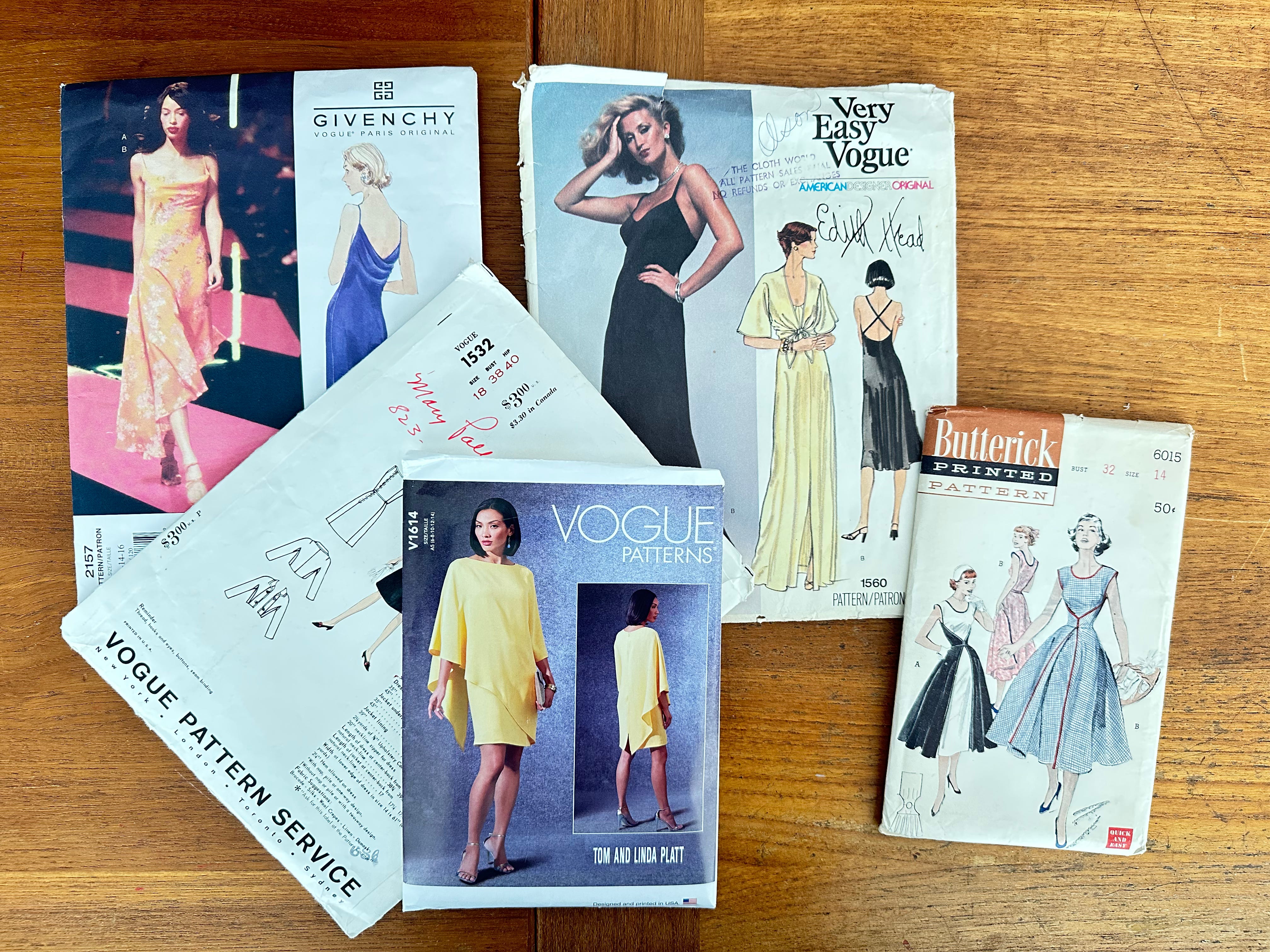
Does Any Sewist Really Pay Full Price for Sewing Patterns?
Yes—sometimes, and for good reason.
I’ve paid full price for patterns more times than I can count. I’ve personally done so when:
A client or I needed a specific design for an upcoming event
I was teaching a class and didn’t have time to wait for a sale before I made samples
I needed a second copy of a pattern immediately
In professional and instructional settings, timing matters. Waiting weeks—or months—for a sale isn’t always practical. Full-price purchases aren’t a failure of thrift; they’re often a function of real-world time constraints.
In addition, independent (“indie”) patternmakers rarely discount their patterns. So, if you are purchasing from Style Arc, Cashmerette, Charm Patterns, or other indie designers, you will likely pay $20 or more per paper pattern, including shipping.
Are Sewing Patterns Actually More Expensive Than They Used to Be?
Short answer: no— when adjusted for inflation.
Many sewists remember that patterns from the “Big-4” pattern companies (Vogue Patterns, Butterick, Burda and McCall’s ) once cost 50 or 75 cents, and that even “expensive” Vogue Designer Patterns were only a few dollars. What’s often forgotten is the broader economic context:
In 1950, minimum wage in the U.S. was $0.75 per hour
A $0.75 pattern from that era equals about $10.09 today
A $3.00 designer pattern from the same period would cost over $43.35 today
Seen through that lens, today’s $25 designer patterns are not an outlier—they are actually less expensive than they should be. Most sewists now pay less for patterns than previous generations ever did, thanks to decades of aggressive discounting.
Why Don’t the Big Pattern Companies Lower Their Prices Permanently?
Because they couldn’t survive if they did. Years of selling below cost caused the consolidation of the Big-4 pattern companies into a single company.
Whether a pattern company is large or small, producing a sewing pattern involves significant labor and expense:
Design and pattern drafting
Sample sewing and testing
Technical writing and editing
Photography, models, and styling
Printing, folding, packaging, and distribution
About a decade ago—when deep-discount pattern sales were at their height—the actual production cost per Big-4 pattern was already over $8. Adjusted for inflation, that figure exceeds $11 per pattern today, before accounting for any profit.
When a big box store sells a pattern for $1.99 or $4.99, it doesn’t mean that the pattern was inexpensive to make—it simply means someone else absorbed the loss. As my economics professor used to say, “There is no such thing as a free lunch.” When prices fall below production costs, the gap is paid for somewhere—often by the people who labor to make the patterns.
Big-4 vs. Independent Patterns: What Are You Really Paying For?
Indie patterns and Big-4 patterns operate under different business models.
Depending upon the maker, indie PDF patterns typically cost $2–$25, and sometimes more. That price usually includes:
A digital file
Variable levels of quality control, pattern testing, and instructions
You get what you pay for: more expensive indie patterns are sometimes offered as paper patterns and often include extensive instruction booklets or video sew-alongs.
For the cheaper Indie patterns, the sewist will bear all the printing costs for digital patterns, plus the time and labor involved in taping and tiling the pattern, and additional time (if applicable) tracing the patterns onto pattern paper for use or fitting. You will also bear the burden of frustration and time spent on self-education when the instructions are incomplete or nonexistent. Finally, you bear the cost of poor quality control. I have yet to use an Indie pattern that doesn’t contain at least one major error. Most contain several errors, and more than one student has brought me a $3 Etsy pattern that lacked the pieces necessary to create the garment shown in the pattern’s photograph. As a sewing professional, I can find or draft a workaround for my students, but I pity sewists who buy these patterns and lack the expertise necessary to fix them.
By contrast, Big-4 patterns run $6 (on sale) to $25 and include:
Professionally drafted patterns with standardized sizing
Printed tissue with key fitting information (bust apex, garment measurements, lengthen/shorten and other alteration lines)
Instructions edited to a consistent standard
Product quality control
Professional photography and styling
Because the Big-4 spend more on quality control, Big-4 patterns have far fewer errors than indie patterns. That’s not to say they are free from errors –humans are humans– however, in my experience, the Big-4 patterns contain more information and fewer errors than indie ones.
Both models have merits—but they are not directly comparable because they incur different costs.
Are Premium-Priced Patterns Worth the Price?
Sometimes—especially if you value instruction, not just design.
Over the years, I’ve learned extraordinary techniques from premium patterns, both vintage and modern, Big-Four and Indie, such as:
Tom and Linda Platt’s ingenious way to suspend a pocket bag in an unlined jacket.
Balenciaga’s clever technique for ending a zipper into a dart.
Pati Palmer’s fitting instructions and “painless placket” shortcut.
Loes Hinse’s way of applying a smooth elastic waistband to pants
…just to name a few. When a pattern teaches you something you wouldn’t easily discover elsewhere, the value extends far beyond the envelope.
Not all instructions are equal. Some patterns offer little more than pattern pieces and assembly notes; others quietly function as masterclasses in garment construction. When a pattern expands your skill set, the price is often justified.
So—Should You Buy Big-4 or Indie Sewing Patterns?
Buy the pattern that best serves your goal.
Need a reliable basic? Big-4 drafting often saves time and frustration
Want a very specific niche design? An indie company may be the right choice
Looking to learn new techniques or explore complex design? Designer patterns, particularly vintage ones, can be invaluable.
And if you do buy Big-4 patterns, consider not waiting for a sale every time. Paying full price is not wasteful—it’s a tangible way of supporting the skilled workers who keep patternmaking viable as an industry.
Final Thoughts on Sewing Pattern Pricing
Sewing patterns are not overpriced curiosities—they are complex, labor-intensive tools created by skilled professionals.
When you buy a pattern, you’re not just purchasing a design. You’re supporting drafting expertise, technical knowledge, and a supply chain that still exists—against the odds—in an increasingly disposable culture.
In that light, the real question may not be “Why are patterns so expensive?”
It may be “Why have we come to expect them to cost so little?”